
Tech, Not Other Newspapers, is
Greatest Challenge to Times, Editor Says
By Bob Rawitch
It’s neither the increased California-based staff of the New York Times nor the 11-newspaper Southern California News Group that is the biggest threat or biggest competitor to the Los Angeles Times, the paper’s Deputy Managing Editor Shelby Grad told the OFS group of retirees in a September 16 Zoom call.
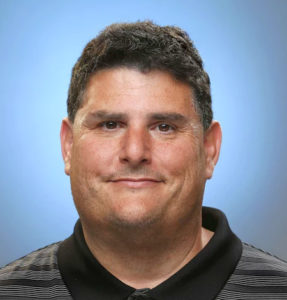
Shelby Grad
Instead, the biggest challenge is the rapidly changing technology people now use to acquire news and information, Grad said.
The Times news staff is about 350, still by far the largest in Southern California. But how those resources – more limited than in the past – are best used, and how readers access what the staff produces, are two key questions the paper is still trying to answer, Grad said.
The move from print to digital has been in the works for years but has been slowed of late because of changes in the world of social media, Grad said. While he did not provide the number of Times digital subscribers, he noted that digital traffic has dropped throughout the news industry as Google, Facebook and Twitter have all moved away from providing news in their feeds.
The last announced circulation numbers were about 260,000 digital and 77,000 print copies. Dr. Patrick Soon Shiong, shortly after he bought the paper in 2018, said his goal was to have one million digital subscribers (setting no timeline), and ultimately five million. Grad said the paper receives about 20 million online views monthly.
Grad said there is an inherent conflict in the paper’s digital strategy between attracting views online — sometimes paid per view — and satisfying those who pay for a digital subscription. The paper clearly wants readers from both sources, but the goal is to produce a daily product with “enough exclusive content that people will want to pay for it,” he said.
“There are some things our readers always want,” Grad noted. For example, during election seasons people are highly engaged in election coverage, while they always turn to the paper for big breaking news, such as the recent flooding in Long Beach and the news helicopter and bus crashes in Chatsworth (not far from the old Valley plant).
Times readers, whether online or in print, are not much different than 20 or 30 years ago, he said. They are predominantly white and wealthier. The digital audience is concentrated on the West Side, but cities like Pasadena, San Marino and Newport Beach also have large concentrations of Times readers.
Grad believes the common denominator is that readers are civically engaged, and care about government, issues like housing, demographics and the environment, and investigative projects.
While the paper still maintains a foreign staff presence in Mexico City and the Middle East, Grad made it clear it is unlikely there will be an increase in staff-produced foreign coverage. He pointed out that Washington Bureau Chief Michael Wilner almost always travels with the President when he goes abroad and is a foreign policy expert.
The goal, he said, is to look at the world in a “global strategic way: how what is happening elsewhere is affecting people here.”
As the staff was steadily reduced, the decision was made that the paper would not try to do everything in a “shallow” way, but instead to do well what it could, and by its quality differentiate its coverage from other papers, whether local or national.
If one walked into the El Segundo newsroom on most days you would only find a dozen or two dozen reporters, though editors come in more often, he said. Reporters come into the office most often on Tuesdays and Thursdays, but he said editors want reporters to use their time efficiently out interviewing people.
Grad said for many reporters it doesn’t make sense to drive to the El Segundo office when they could instead use that time for reporting.
The issue of working remotely was a major topic in negotiating the last union contract, but Grad said he knew of no case where anyone was disciplined for not coming into the office enough.
While the pandemic forced a transition to working remotely that continued after COVID restrictions eased, Grad said the paper like other businesses had found efficient ways to use remote work. These include using Slack chats, which allow staffers to communicate confidentially and rapidly. For example, a slack channel was in use within minutes of the September 15 Chatsworth helicopter crash.
Grad said he also used AI to find crash experts at USC, UCLA, and flight schools after the helicopter tragedy. “I had 10 names within seconds, and it would have taken me a half hour using traditional research,” he said. (It turned out that the paper used none of these, because a reporter had an expert source.)
Grad said staffers use AI for research as a reporting tool, but never for writing. They’ll often use it to identify terms to include in their articles that are used by search engines (a technique known as search engine optimization) to enhance readership for stories and will sometimes use it to see if they can improve a headline written by a human. But, he said, information from AI is always verified before using it.
“I’ll also use it to find blind spots I may have,” Grad added.
The editor said he has given up predicting when the print edition will cease. “In 2011 we were saying 2016, and then we were saying 2020,” he recalled.
But the reality is there are people really wedded to the print edition, he said, and it still draws significant advertising revenue. He said over the years leadership has consistently underestimated how attached some readers are to the print product, noting that the Wall Street Journal still prints more than 300,000 papers a day, more than anyone else.